Why Social Media Feels "Addictive"
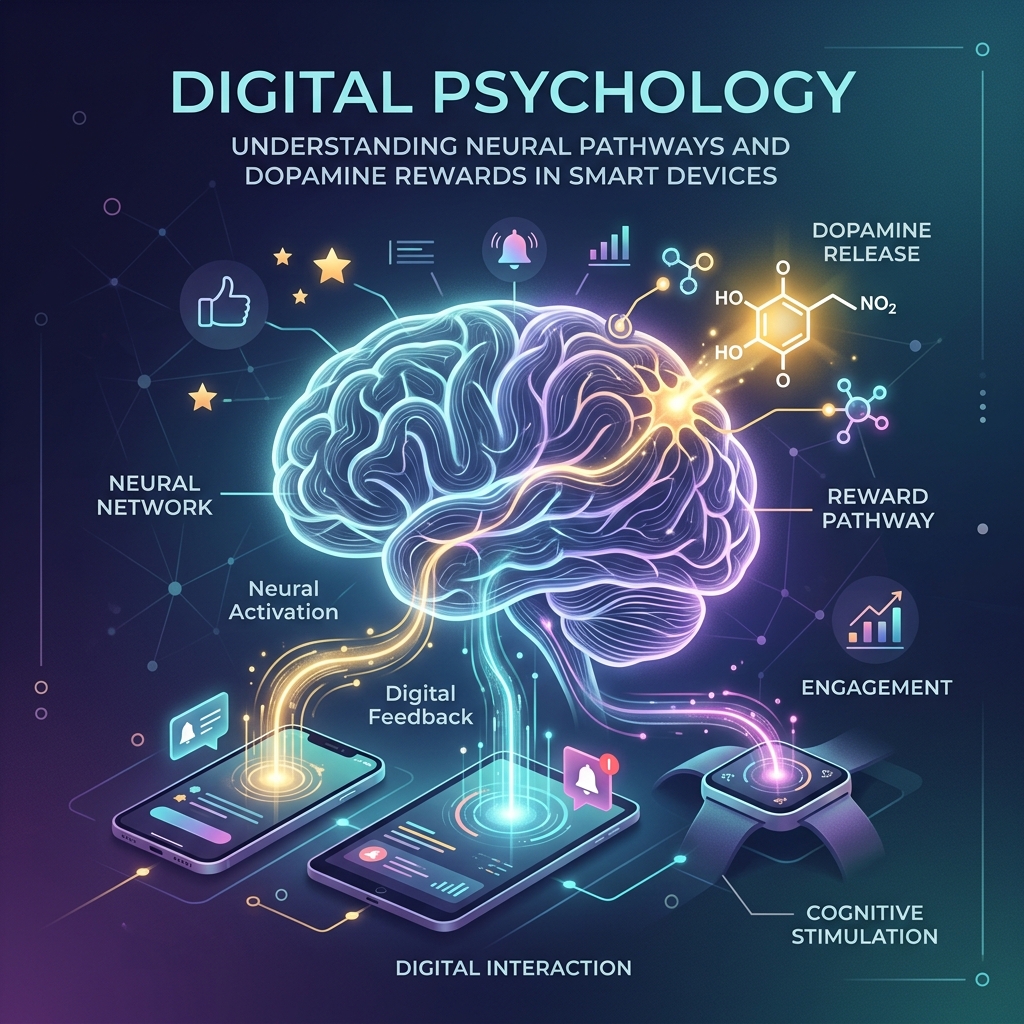
Almost everyone has encountered the situation where you open your social media app to "check for just a minute" and before you know it, an hour has passed. While the actions described here would seem to be nothing more than evidence of a lack of self-regulation, research in neuroscience indicates that social media applications are being created to stimulate the brain's reward pathway (Alter, 2017). The excess use of social media creates a host of problems, including issues related to concentration, mood, and long-term psychological/mental health.
Dopamine is the most influential chemical involved with using social media. Dopamine is a neurotransmitter that assists in motivation, pleasure/reward, and learning via reinforcement. Anytime an individual receives anything positive (i.e., enjoyable), dopamine is released into areas of the brain referred to as the Nucleus Accumbens (Montag & Diefenbach, 2018). The subsequent release of dopamine increases the likelihood of the individual repeating similar behaviors again in the future.
Social media applications utilize variable reward systems. In contrast to providing consistent rewards, social media applications provide unpredictable rewards in forms of "likes," notifications, messages, and interesting content. Studies have indicated that unpredictable rewards create greater activation in the brain's reward system compared to predictable rewards (Alter, 2017). It illustrates why so many individuals constantly check their phones regardless of whether there are notifications each time. The unpredictability of when you receive a notification or a like becomes psychologically reinforcing.
Long-term activation of the brain's reward system from repeated exposures to varying levels of stimuli may impede attentional abilities and emotional regulation. The rapid presentation of various stimuli within social media causes conditioning in the brain to require a constant flow of new stimuli, making it increasingly difficult for individuals to focus on tasks requiring prolonged periods of concentration, such as reading or studying. Furthermore, social media use has been found to increase anxiety and reduce self-esteem among adolescent populations (Twenge & Campbell, 2018). Social comparison is a major contributor to the relationship between social media use and feelings of inadequacy, loneliness, and FOMO (fear of missing out). Social comparison occurs because users typically view others' social media posts as idealized representations of those people's lives. When comparisons occur repeatedly over a long period of time, it contributes to feelings of isolation and fear that one might miss some aspect of life if they do not continue to monitor their peers' activities online.
In addition, excessive usage of social media may impact the quality of sleep. A large number of students regularly access their smartphones close to bedtime while exposed to blue light, which affects melatonin secretion and circadian rhythms. Sleep deprivation results in numerous negative consequences, including; increased stress, impairment of memory function, and diminished ability to regulate emotions (Twenge & Campbell, 2018). Therefore, social media may indirectly cause harm to an individual's mental health by interfering with one of its most critical recovery mechanisms, sleep.
Although social media is capable of causing many adverse outcomes, the inherent nature of social media is neutral. For example, social media may offer individuals avenues for entertainment, educational opportunities, and connections with others when usage is moderate. Understanding how social media impacts the brain allows for insight into why many individuals experience difficulties limiting screen time. Understanding the neurobiological basis for social media addiction will allow students to gain awareness regarding their own habits and make necessary adjustments to minimize their unhealthy associations with technology.
References
- Alter, A. L. (2017). Irresistible: The rise of addictive technology and the business of keeping us hooked. Penguin Books.
- Montag, C., & Diefenbach, S. (2018). Towards homo digitalis: Important research issues for psychology and the neurosciences at the dawn of the internet of things and the digital society. Sustainability, 10(2), 415. https://doi.org/10.3390/su10020415
- Twenge, J. M., & Campbell, W. K. (2018). Associations between screen time and lower psychological well-being among children and adolescents: Evidence from a population-based study. Preventive Medicine Reports, 12(12), 271–283. https://doi.org/10.1016/j.pmedr.2018.10.003