An Overview of OCD
Have you ever heard someone describe their actions as “so OCD”? When referring to organization, neatness, or perfectionist tendencies that interfere with daily life, people tend to use this phrase. For example, someone might enjoy having a neat room or always ensuring their desk is organized, and claim their “OCD” prevents them from making it messy. While cleanliness and organization may be something those with Obsessive-Compulsive Disorder (OCD) obsess over, such traits are often misused by those without the disorder. Since the term “OCD” has become used casually as slang and throughout the media, people have become unaware of the repercussions of this language. The condition has become characterized as a quirk that some people have, instead of being regarded as a serious mental health issue that many suffer from. OCD, in reality, involves repetitive, uncontrollable thoughts and behavior. For someone to be clinically diagnosed with OCD, such behavior must severely disrupt their daily life and activities.
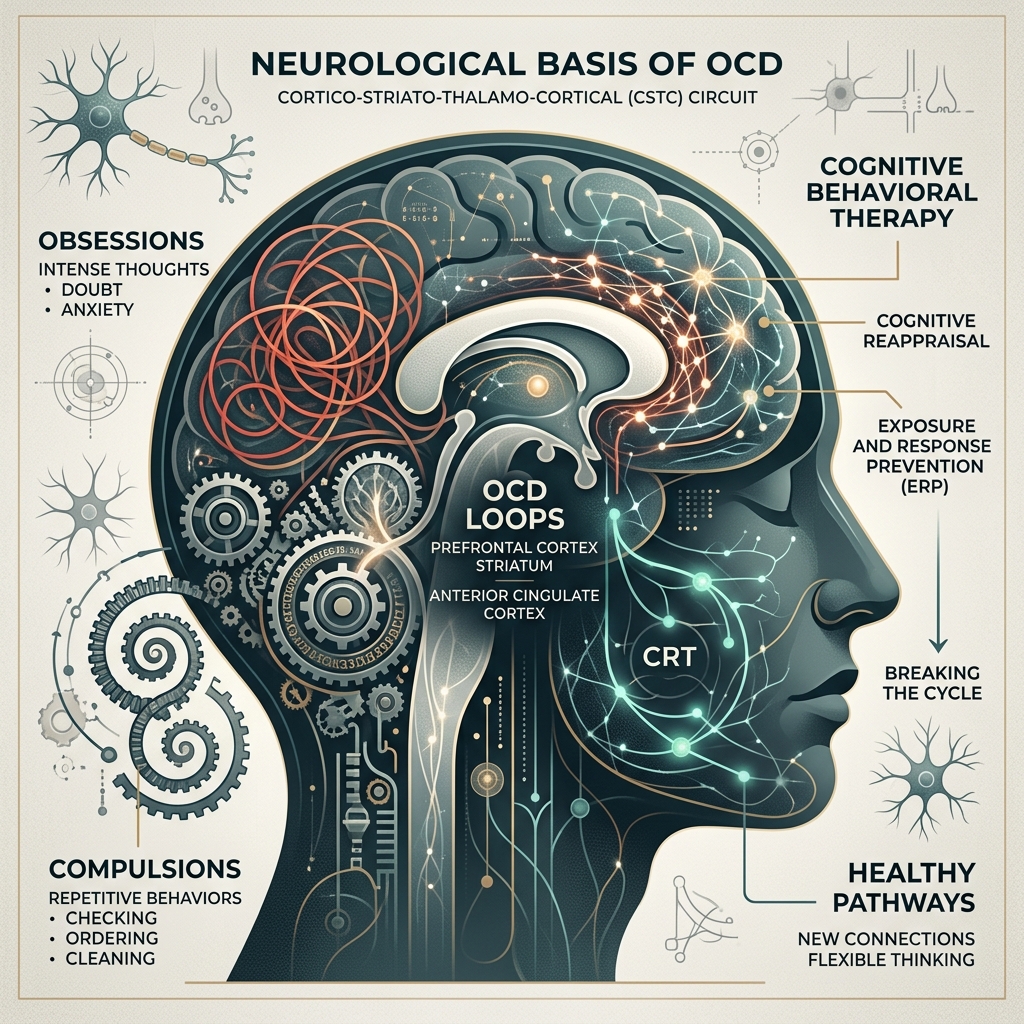
Specifically, OCD involves a cycle of two main symptoms, which include obsessions and compulsions. Obsessions are unwanted and intrusive thoughts that people with OCD tend to dwell on. They are characterized into subtypes, as there are common stressors that those with OCD experience. These obsessions can include fears of being contaminated by germs, a need for symmetry and order, and thoughts of violence, which can include harming oneself and others. They cause feelings of discomfort and anxiety, which people attempt to temporarily control with compulsions. Compulsions are repetitive acts or behaviors used to relieve the obsessions, which people feel the need to perform. Compulsions may start appearing slowly, but soon become automatic actions for those who suffer from the mental illness. Some physical compulsions include, but are not limited to: constant cleaning, checking to verify appliances are turned off, checking if doors are locked, and repetitive ordering until objects are in the “right” place. Mental compulsions can include the constant repetition of phrases or prayers intended to cancel out obsessive thoughts, and reviewing past events or conversations, ensuring nobody was offended in the interaction.
Overall, roughly 1 to 2% of the population is chronically affected by OCD (American Psychological Association, 2019). People suffer from it for a multitude of reasons, as the condition manifests differently across patients, and there is no single cause. In brain imaging results, people with OCD have been found to have slight differences in the hyperactivity of specific areas of the brain (Singh et al., 2023). Such areas include the orbitofrontal cortex and the anterior cingulate cortex, which work together to regulate emotions, detect errors in our behavior, and process motivation. Other areas of the brain associated with this difference include the thalamus, which processes sensory and motor signals, and the basal ganglia, which are responsible for habit formation and action selection.
OCD can also be genetic, as about 10-20% of kids who have a parent with OCD are likely to develop it at some point in their life (International OCD Foundation, 2026). While the disorder is too complex to be attributed to just genetics, learned behavioral patterns and environmental influences can trigger genetic predispositions that cause obsessions and compulsions. Political crises or epidemics have also been attributed to a rise in obsessive-compulsive tendencies, or in people diagnosed with the disorder. For example, with the COVID-19 pandemic, there was a rise in people suffering from OCD due to increased anxiety and fears of contamination. Furthermore, those with OCD typically commonly suffer from specific mood or anxiety disorders that contribute to their obsessive and compulsive tendencies.
Currently, OCD has no single cause and no direct cure. However, various treatments have shown promise for people with this condition. Serotonin reuptake inhibitors (SRIs) are already being used by patients, which increases the availability of the neurotransmitter serotonin in the brain. While a chemical imbalance in the brain is not the sole cause of OCD, the medication still works to regulate emotions, aiming to limit symptoms of the disorder. Patients can also use Cognitive Behavioral Therapy (CBT) to restructure maladaptive thought patterns that can cause OCD. CBT is a good alternative for individuals who do not want to manage their OCD through medicines, as SRIs come with a multitude of side effects. OCD is a complex disorder characterized by obsessions and compulsions, and it debilitates and disrupts the lives of people who have the condition, as well as their families and friends. So, the next time you describe your neat habits as “OCD”, consider the seriousness of the condition beyond just organization, and the toll it has on millions of people worldwide.
References
- International OCD Foundation. (2026). About OCD. International OCD Foundation. https://iocdf.org/about-ocd/what-causes-ocd/#return-note-67-1
- O'Hara, D. (2019, April 24). For OCD expert Dean McKay, no two cases are the same. American Psychological Association. https://www.apa.org/members/content/mckay-obsessive-compulsive-disorder
- Singh, A., Anjankar, V. P., & Sapkale, B. (2023). Obsessive-Compulsive Disorder (OCD): A Comprehensive Review of Diagnosis, Comorbidities, and Treatment Approaches. Cureus, 15(11), e48960. https://doi.org/10.7759/cureus.48960