The Importance of Mental Health for Athletes
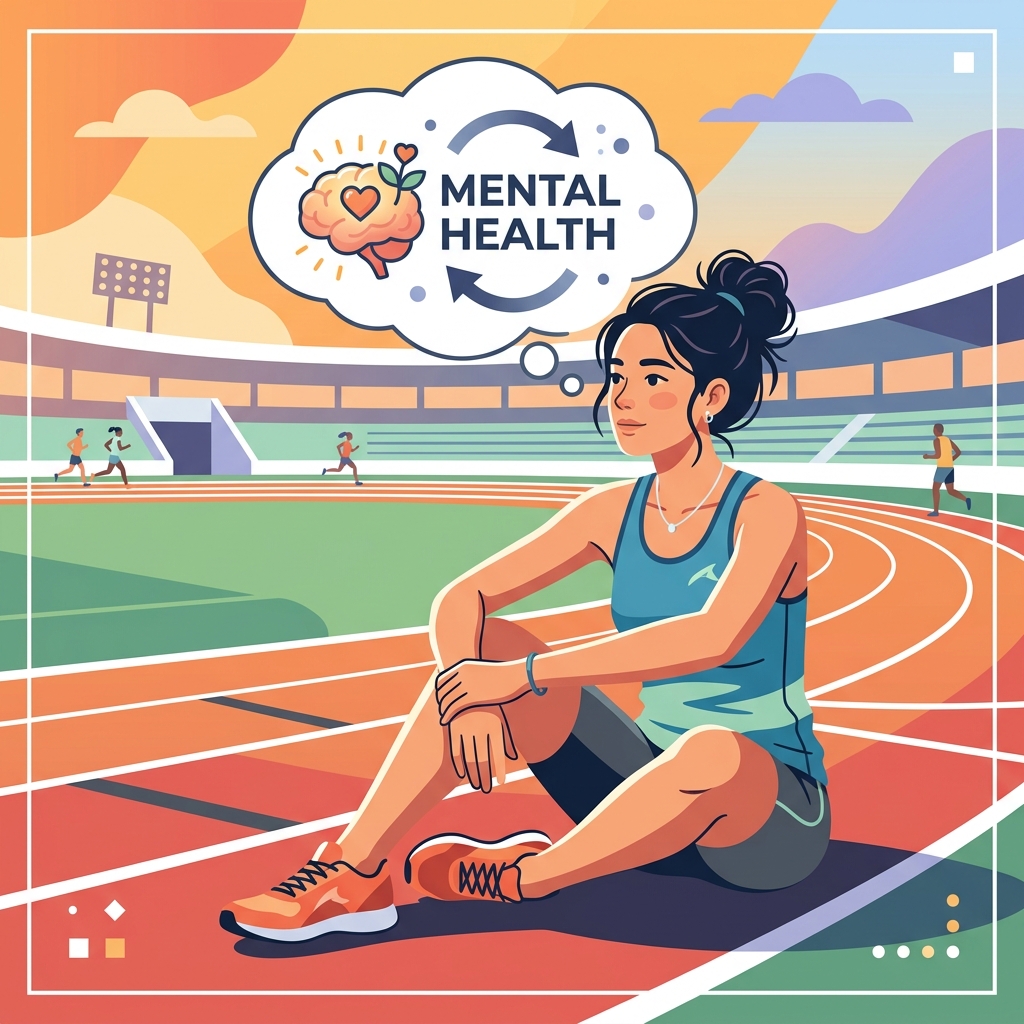
Recently, mental health awareness among athletes has been on the rise. For elite athletes, their performance often depends as much on their mental preparedness as their physical capabilities. Research shows that 33% of college students experience a mental health disorder during their time at college, and that 30% of those college students seek out help. But for athletes, the number is a lot lower, with only 10% of college athletes experiencing a mental health disorder reaching out for help. In competitive sports, there is a lot of stigma around mental health, as athletes are taught to push through adversity and not show weakness. Moreover, pressure to maintain a certain physique can lead to athletes developing body dysmorphia and unhealthy eating habits, which could have life-threatening consequences. As a result, it is vital to identify barriers to destigmatizing mental health amongst athletes.
Athletes face unique challenges that result in an increased prevalence of mental health issues. Firstly, athletes face immense pressure from coaches, parents, and fans to deliver at a high level. Such sustained pressure can cause athletes to burn out and develop anxiety or depression, as their bodies tire out mentally and physically. To add to this issue, athletes in the 21st Century have been pushed to specialize in a certain sport earlier and earlier, increasing their chances of injury and burnout through intense and frequent practices. Moreover, athletes who devote all their effort to a specific sport at an early age risk missing out on important developmental experiences during their childhood and adolescence, leading to a poor life balance, which can result in a lack of independence and purpose when they transition into adulthood. Additionally, the rise of social media has led to the constant public scrutiny and comparison of athletes, which has a detrimental effect on their mental health. Social media criticism is particularly damaging, as users have a degree of anonymity that athletes do not have.
To combat and treat mental health issues, it is important to seek support. Talking with a sports psychologist can provide a safe space for athletes to address and overcome their mental struggles. Cognitive-Behavioral Therapy (CBT) has been shown to help athletes alter their negative thought patterns and enhance self-awareness and positive thinking. Athletes can practice sports psychology techniques like mindfulness and visualization to improve their mental focus and confidence. Mental health resources are not limited to athletes who are currently suffering from their mental health, but can be implemented into a training routine to prevent burnout and provide motivation for athletes.
Yet, traditionally, mental health has been stigmatized within the athletic community. For most athletes, the idea of “toughness” has been ingrained in their minds since they started playing a sport. This learned mentality can cause athletes to internalize their mental health struggles and not seek help. Internalization perpetuates a cycle of silence, where other athletes are unwilling to speak up about their mental hardships due to them perceiving that their suffering is abnormal. Furthermore, athletes are discouraged from vocalizing their challenges with mental health as they fear retribution from authority figures, whether it be losing sponsorships or a spot on the team. Finally, many coaches are unwilling or inexperienced with recognizing and dealing with mental health issues, leading to athletes feeling unacknowledged and hopeless in their internal battle.
In the past few years, however, there has been an influx of professional athletes discussing their personal mental health struggles, destigmatizing the topic. For example, gymnast Simone Biles openly discussed her experience with the “twisties” at the 2021 Tokyo Summer Olympics, showing that even the greatest athletes are not perfect. Even more recently, the triumph of Alysa Liu at the 2026 Milano-Cortina Winter Olympics revealed how prioritizing mental health can lead to greater athletic successes. These all-time greats have shown that prioritizing mental health is not something that is “weak”, but is something that makes you stronger and better. The rise in athletes being transparent about their mental health struggles has begun to destigmatize the notion of mental health in sports. But just athlete awareness is not enough; broader change must occur. The responsibility to create an environment where mental health issues can be openly discussed in sports does not solely fall on the athlete. It rests even more on the coaches, who must provide empathy and support, and on us, the fans, who need to realize that our favorite athletes are never perfect.
References
Athletes and Mental Health: Pressure behind the Performance. (2025, October 17). Deconstructingstigma.org. https://deconstructingstigma.org/guides/athlete-mh
Craine, K. (2024). Addressing Mental Health Challenges for Olympic and Elite Athletes. Baylor.edu. https://news.web.baylor.edu/news/story/2024/addressing-mental-health-challenges-olympic-and-elite-athletes
Luebbe, D. (2025, October). The Role of Sports Psychology in Athletic Performance. Concordia University, Nebraska. https://www.cune.edu/news/role-sports-psychology-athletic-performance
Reardon, C. L. (2023). The Mental Health Crisis in Sports: the Perfect Storm of Contemporary Factors. Journal of Athletic Training, 58(9). https://doi.org/10.4085/1062-6050-0484.22
Schellong, M. (2017, July 19). How College Athletes Are Fighting the Stigma of Mental Illness. USA TODAY; college.usatoday.com. https://www.usatoday.com/story/college/2017/07/19/how-college-athletes-are-fighting-the-stigma-of-mental-illness/37433673/
Sumler, C. (2024, December 2). 6 Ways Social Media Impacts Athlete Identity. Usafieldhockey.com. https://www.usafieldhockey.com/news/2024/november/29/6-ways-social-media-impacts-athlete-identity
Velasco, H. (2017, July 21). Few student-athletes with Mental Illness Seek Help. USA TODAY. https://www.usatoday.com/story/college/2017/07/21/few-student-athletes-with-mental-illness-seek-help/37433787/